
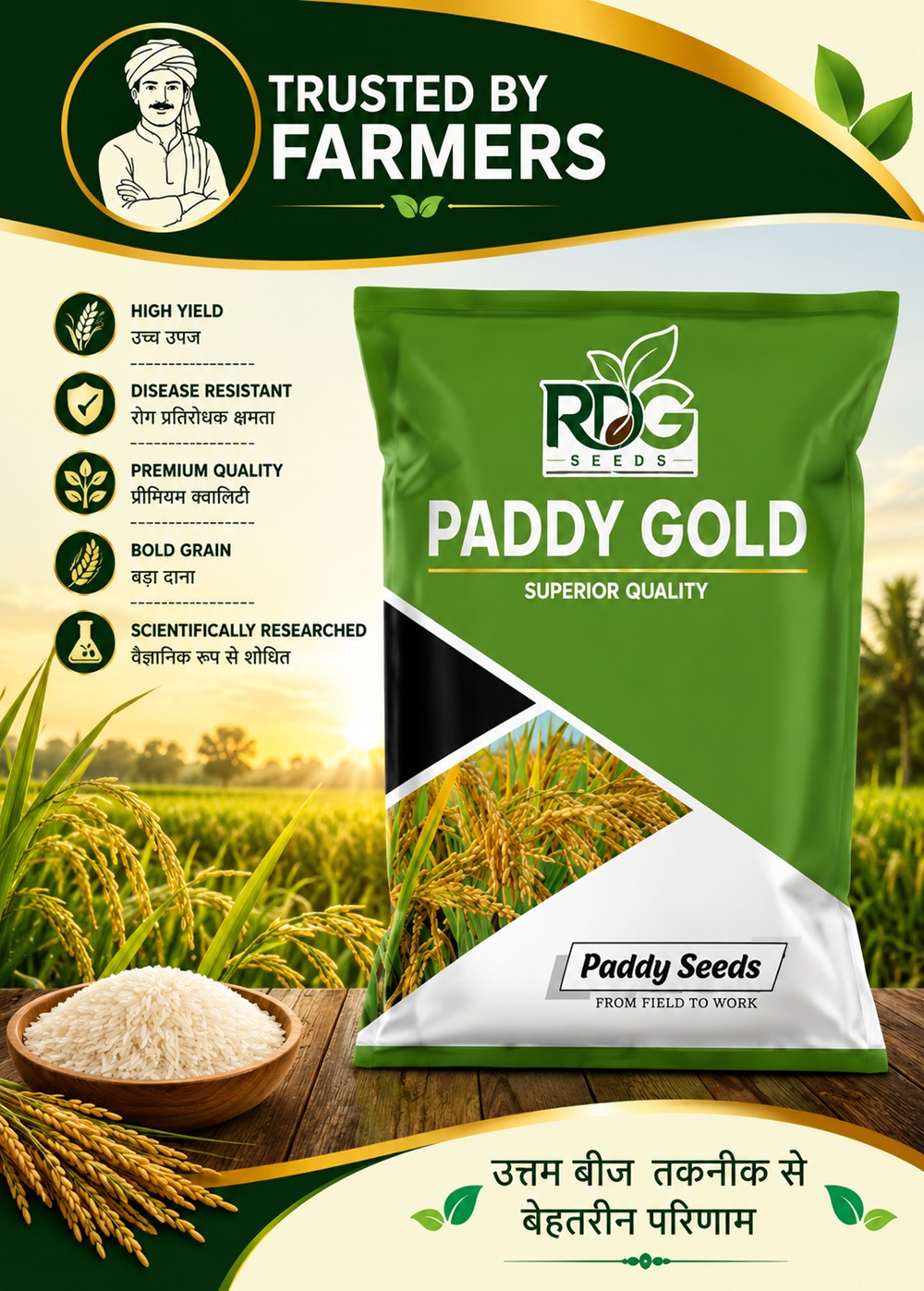
Paddy Gold
is a recognized variety of non-basmati raw rice. Cultivated in northern India (such as MP, Haryana, and Uttar Pradesh, Bihar), this hardy grain is noted for its good cooking quality and strong commercial presence. Key heavy grain that mills well with a characteristic texture Yield: Average yields typically range from 28 to 30-quintals per acre. Maturation: Reaches maturity in about 142 days after seeding. Disease Resistance: Known for displaying strong tolerance and resistance against pathotypes of the bacterial leaf blight pathogen.
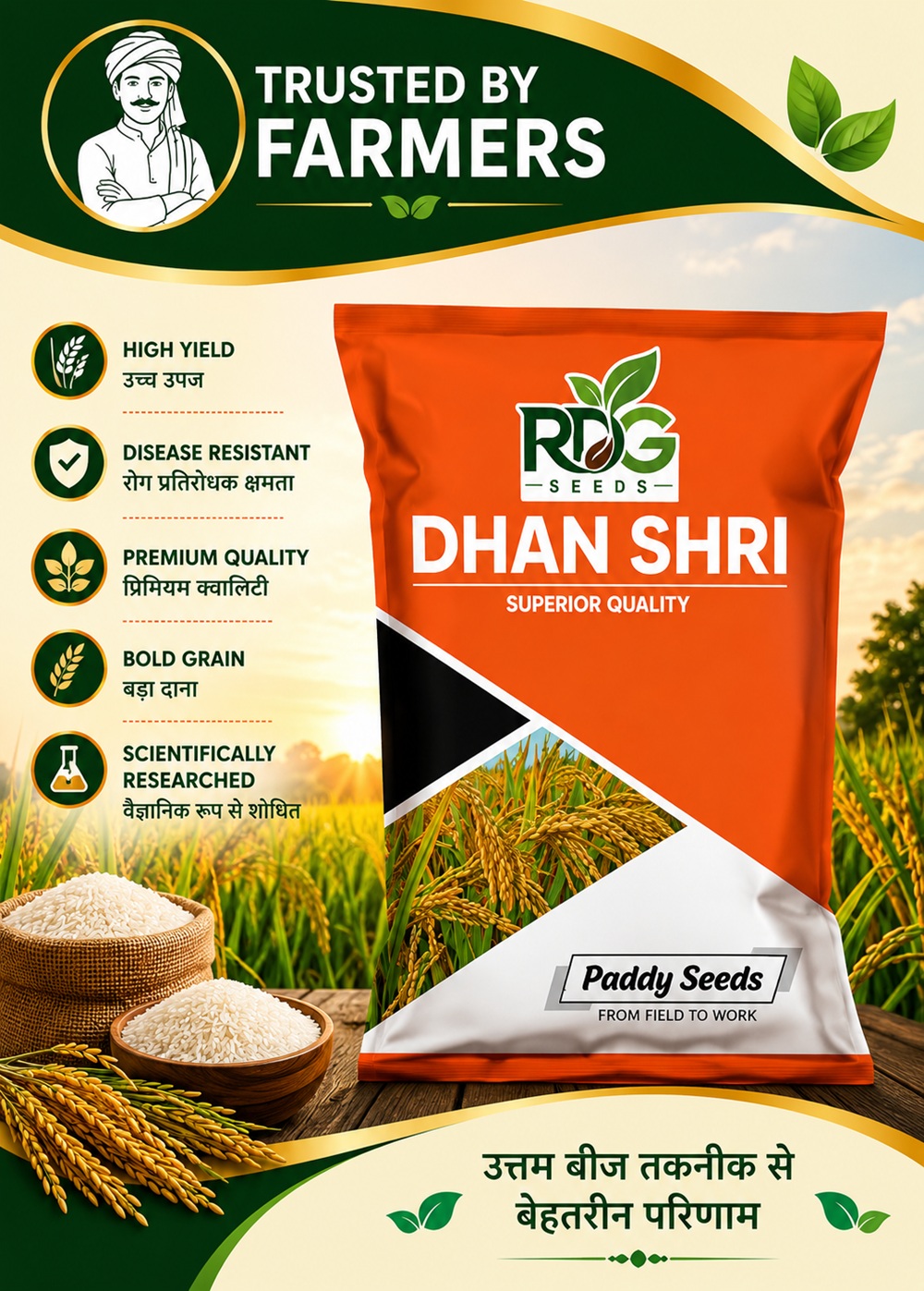
Dhan Shri
Dhan Shri as Samba Mahsuri is one of India's most popular, high-yielding non-basmati paddy varieties. Revered for its fine, non-sticky rice and exceptional cooking quality, it is heavily sought after in both domestic and international markets. Key Characteristics at a Glance Crop Duration: Medium-to-long duration, typically maturing in 130 to 145 days. Grain Type: Medium-slender grains that are translucent, non-chalky, and white. Yield Potential: Average yields range from 25 to 28 quintals per acre Plant Stature: Semi-dwarf with strong tillering ability, making it non-lodging (highly resistant to falling over in the wind).Cultivation & Agronomy Seasonality: Highly suitable for both Kharif and Rabi seasons in irrigated lowland areas. Soil Requirements: Thrives in well-drained, fertile clayey to loamy soils. Seed Treatment: Seeds should be soaked or primed prior to nursery sowing to ensure high germination rates. Harvesting: Harvest should occur when approximately 80% of the panicles turn straw-colored. To avoid fungal or pest attacks, grains.
R5244
Maturity Duration: 130 to 135 days(medium duration)Grain Type: Medium Slender (MS) with high market value and shiny appearancePlant Height: Semi-dwarf, robust, and lodging-resistant (approx. 95–110 cm)Disease Tolerance: Built-in genetic tolerance to Bacterial Leaf Blight (BLB)Yield Potential: High performance, yielding around 25 to 35 quintals per acre depending on management and soil conditions
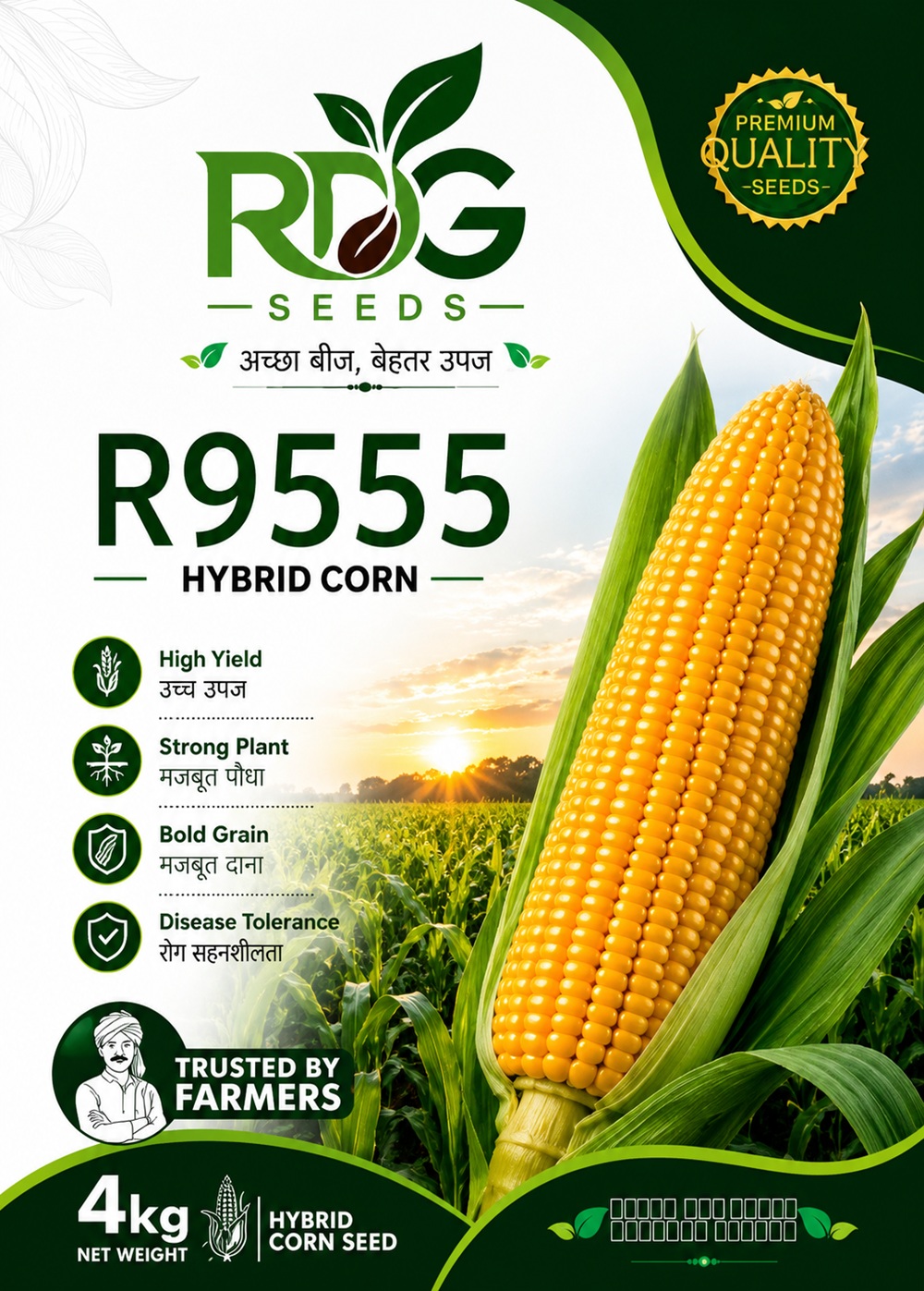
R9555
In the context of agriculture, a Single Cross Hybrid (F1) for maize (makka) is a controlled cross between two genetically pure, inbred parent plants. The resulting seeds (the F1 generation) are specifically bred to exhibit hybrid vigor (heterosis), meaning the plants grow taller, mature faster, and produce significantly higher yields.Key Characteristics of Single Cross Hybrid MaizeHigh Yield & Uniformity: Every plant in the field is genetically identical, leading to uniform growth, tassel height, and maturation time.Controlled Pollination: The hybrid seed is produced in isolated fields. Breeders manually or mechanically remove the tassels (male flowers) from the female parent plants.
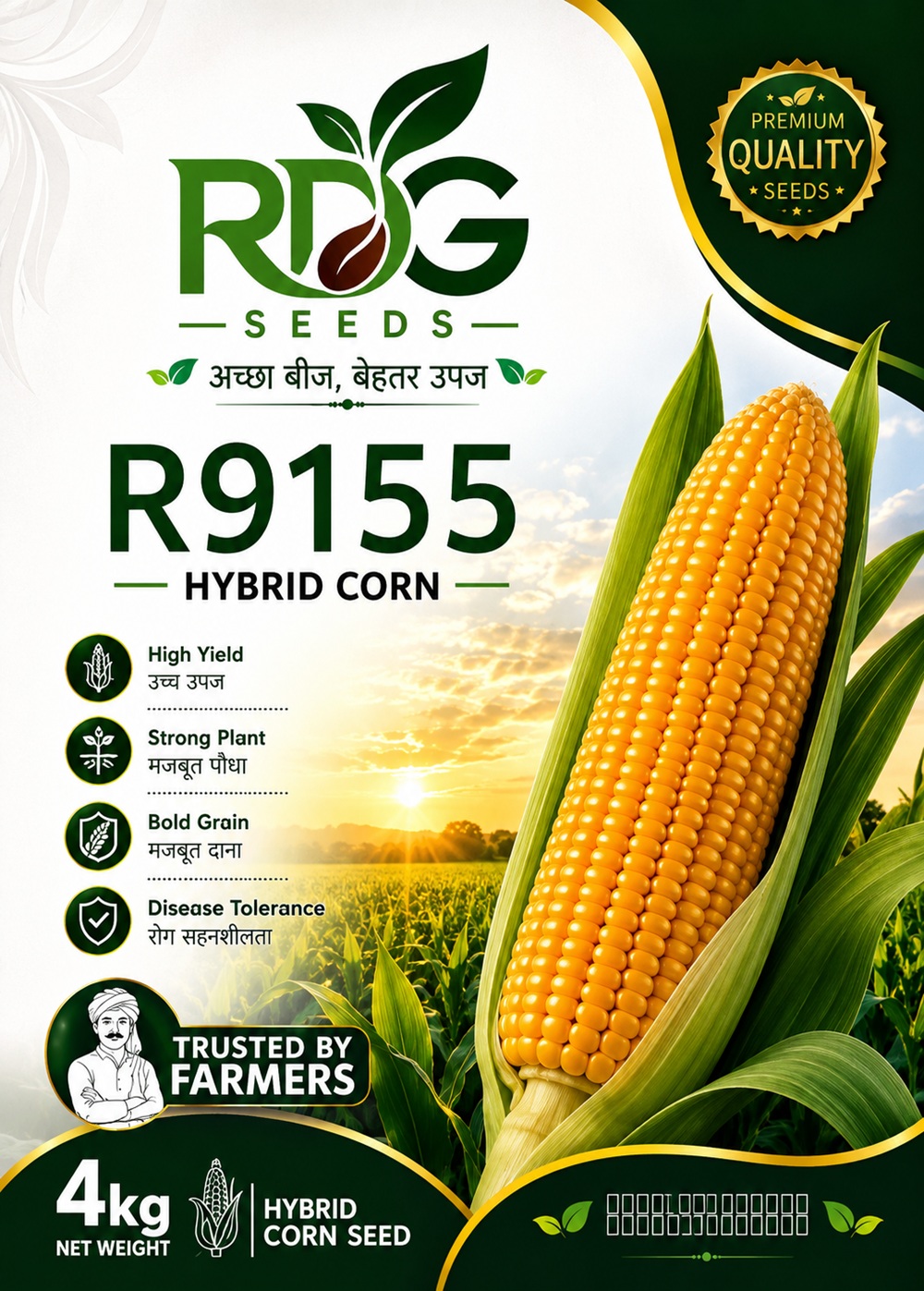
R9155
R9155 refers to a high-yielding hybrid variety of maize/corn (makka) widely used in Indian farming. "Babal Cros" likely refers to its strong "cross-pollination" characteristics, while "Makka" is the Hindi term for corn. The description of this high-yield maize variety includes: Plant Structure: Grows into tall, sturdy, and wind-resistant stalks. It features strong, deep root systems that prevent lodging (falling over in high winds). Cob Characteristics: Produces thick, cylindrical cobs that are tightly filled from tip to bottom. Each cob typically contains 16 to 18 straight rows with about 45 to 46 strong kernels per row. Grain Quality: The kernels are long, thick, and heavy, making them highly valued for both human consumption and livestock feed. Yield & Durability: Known for good disease resistance and excellent drought tolerance. It frequently features a "stay-green" characteristic where the leaves remain green even as the crop ripens, making the stalks highly suitable for silage and fodder. Hybrid maize seeds like these are commonly grown during both the Kharif and Rabi seasons across India. Could you tell me what specific information you are looking for (e.g., pricing, sowing methods, or pest management), and what state or region you are farming in? I can help provide tailored advice.
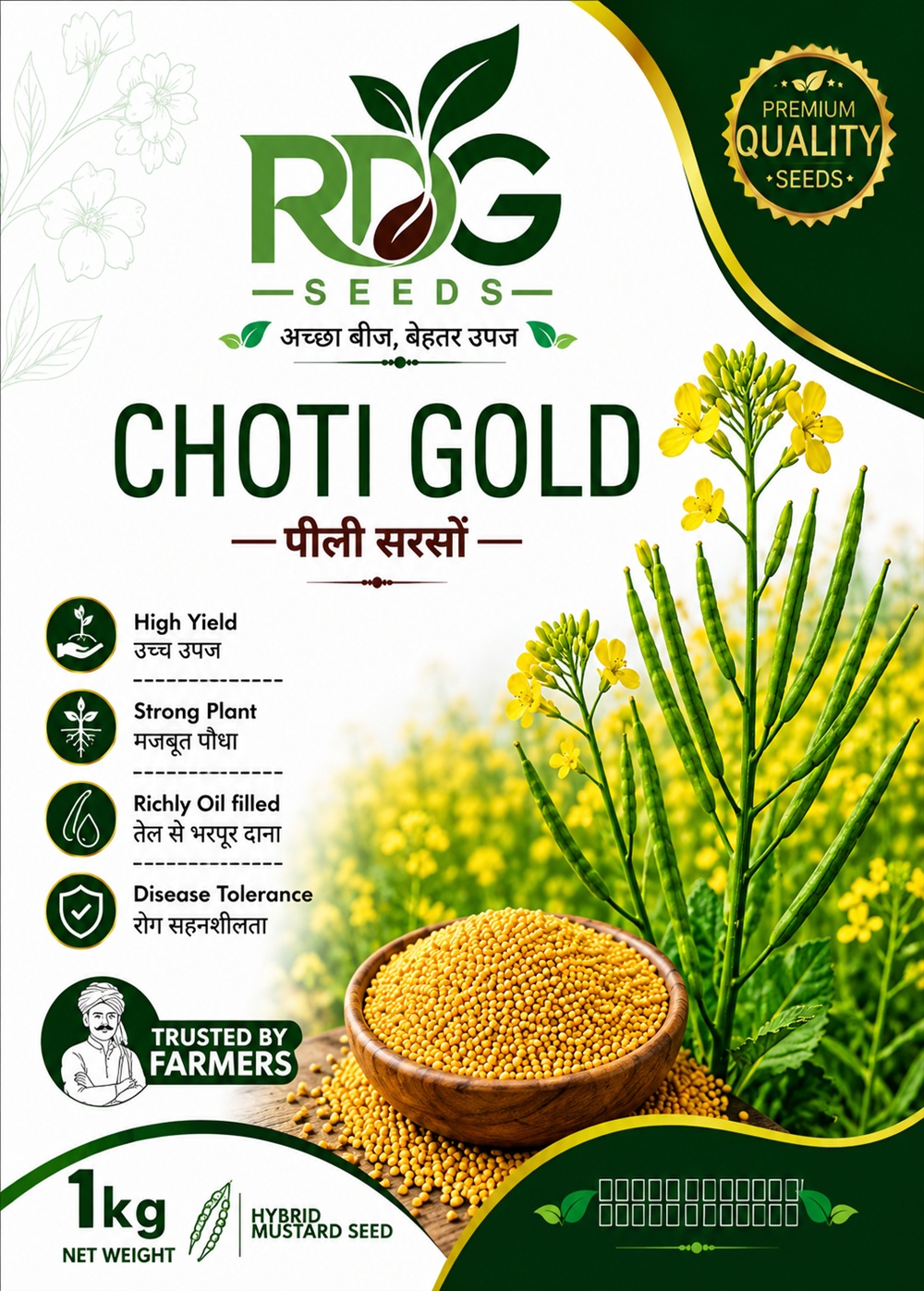
CHOTI GOLD
Key Crop Characteristics• Maturity Duration: 75 to 95 days depending on the region and local sowing conditions.• Average Yield: Approximately 6.0 quintals per acre (or about 12 quintals per hectare).• Oil Content: High oil percentage, typically around 44%.• Plant Type: Medium-sized plant structure well-suited for double-cropping and short Rabi rotation systems.
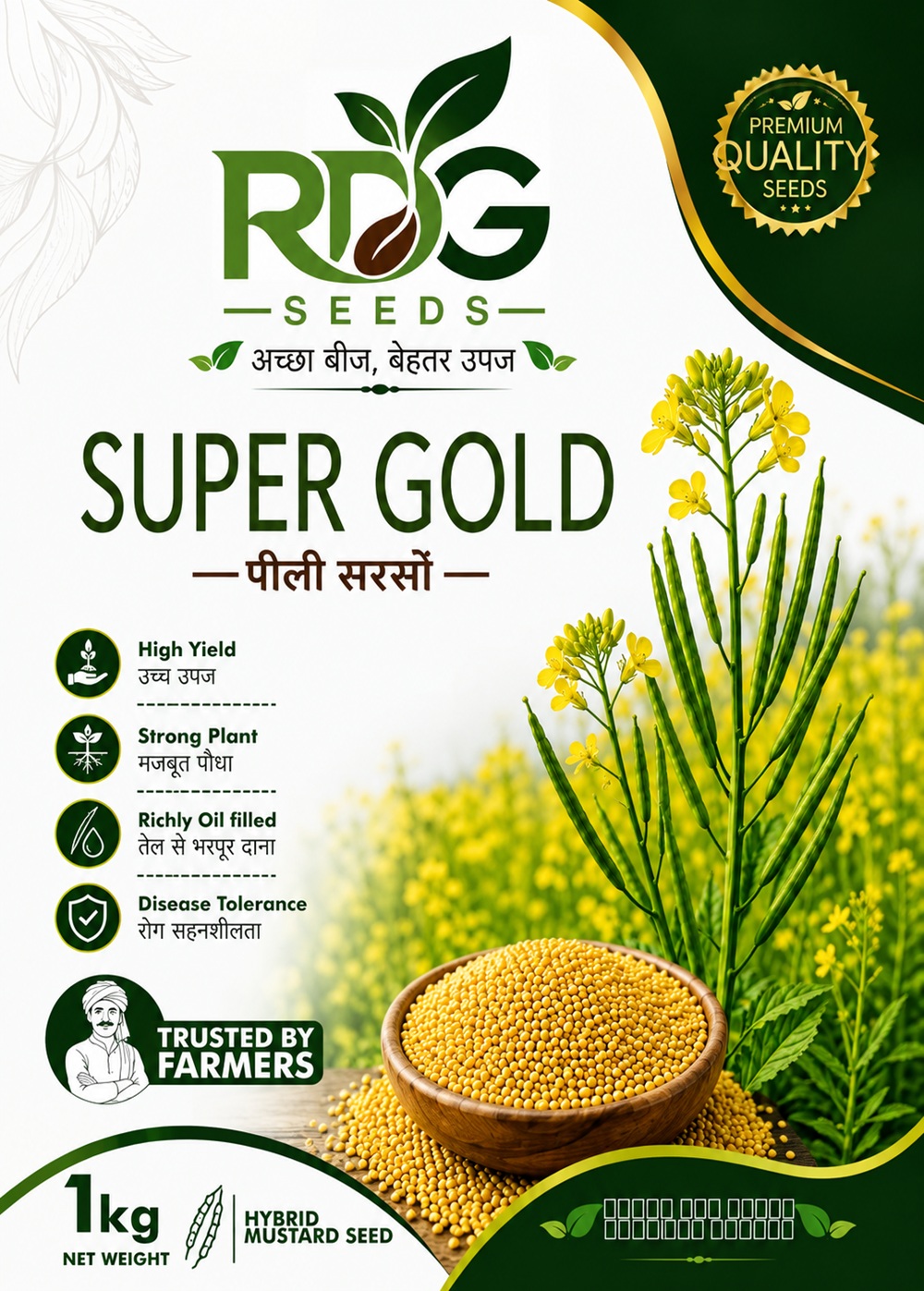
SUPER GOLD
Mustard Super Gold is a high-yielding, yellow-seeded variety of Indian mustard (Brassica juncea). It is highly prized by North Indian farmers for its rich oil content and is commonly grown as a Rabi (winter) crop. Key Characteristics Crop Cycle: Requires about 110–130 days to reach maturity. Yield & Oil: Produces a high grain yield of 19–21 quintals per hectare. The extracted oil typically contains a high oil yield of 42%-43%.Seed Type: The grains are bold and pure yellow. Disease Resistance: This variety has good built-in tolerance against aphids, which is one of the most common pest threats to mustard crops.
R5255
Mustard 5255 high-yielding hybrid mustard seed variety. It matures mid-early (125-130 days) and yields 12-15 quintals per acre, producing bold, dark brown grains with a high oil content of 41-42%.Key Features and Specifications Seed
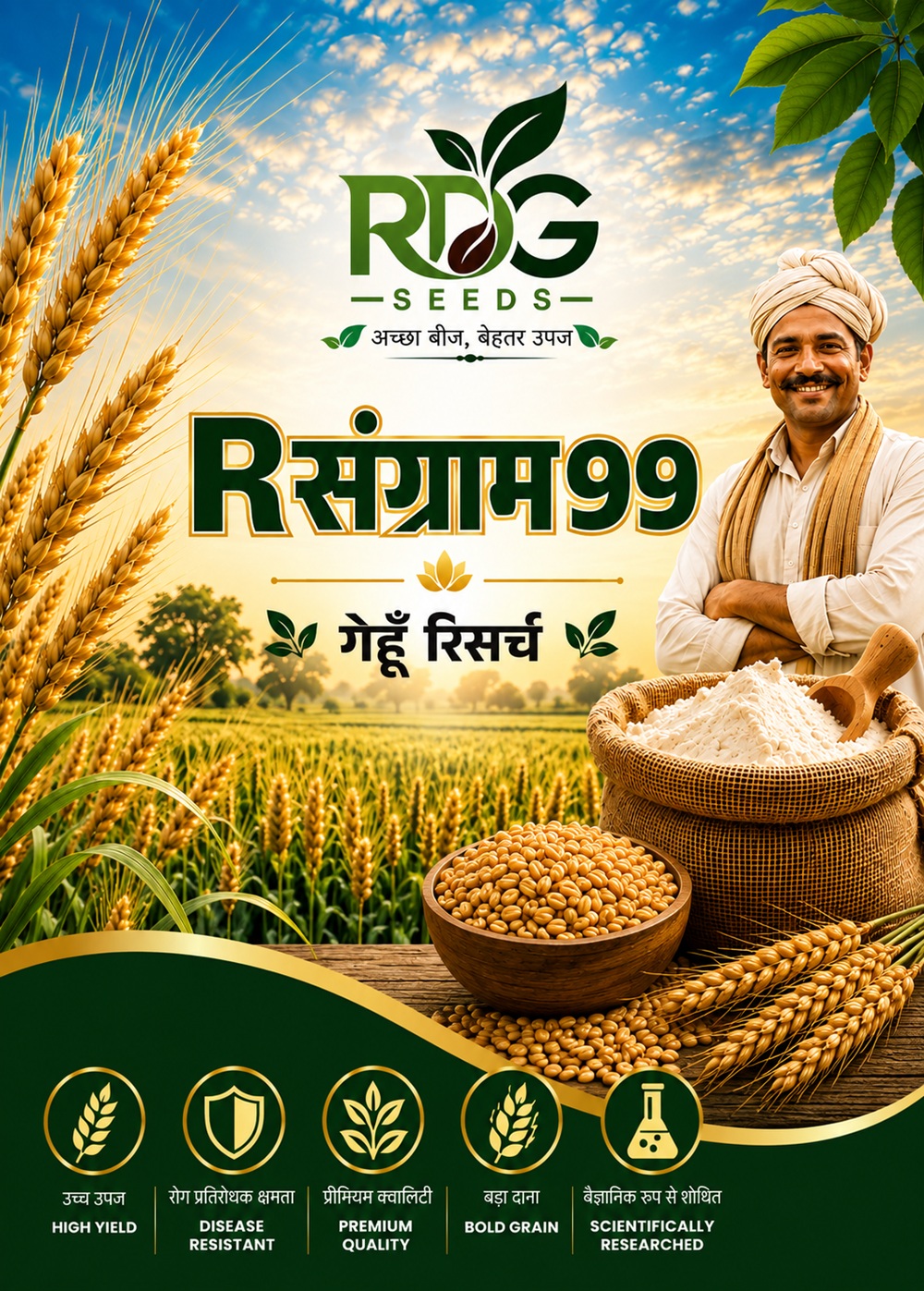
R Sangam 99
Matures in about 110–125 days, with spike emergence occurring in roughly 99 days. Plant Height: Medium stature, typically ranging from 88 cm to 105 cm, which helps prevent lodging even with high fertilizer use. Grain Quality: Features bold, hard, and lustrous amber grains. Yield Potential: Averages between 60 to 65 quintals per hectare depending on the farming practices and climatic zones. Disease Resistance: Exhibits strong natural tolerance against major diseases like brown rust, stripe rust, Karnal bunt, and powdery mildew.
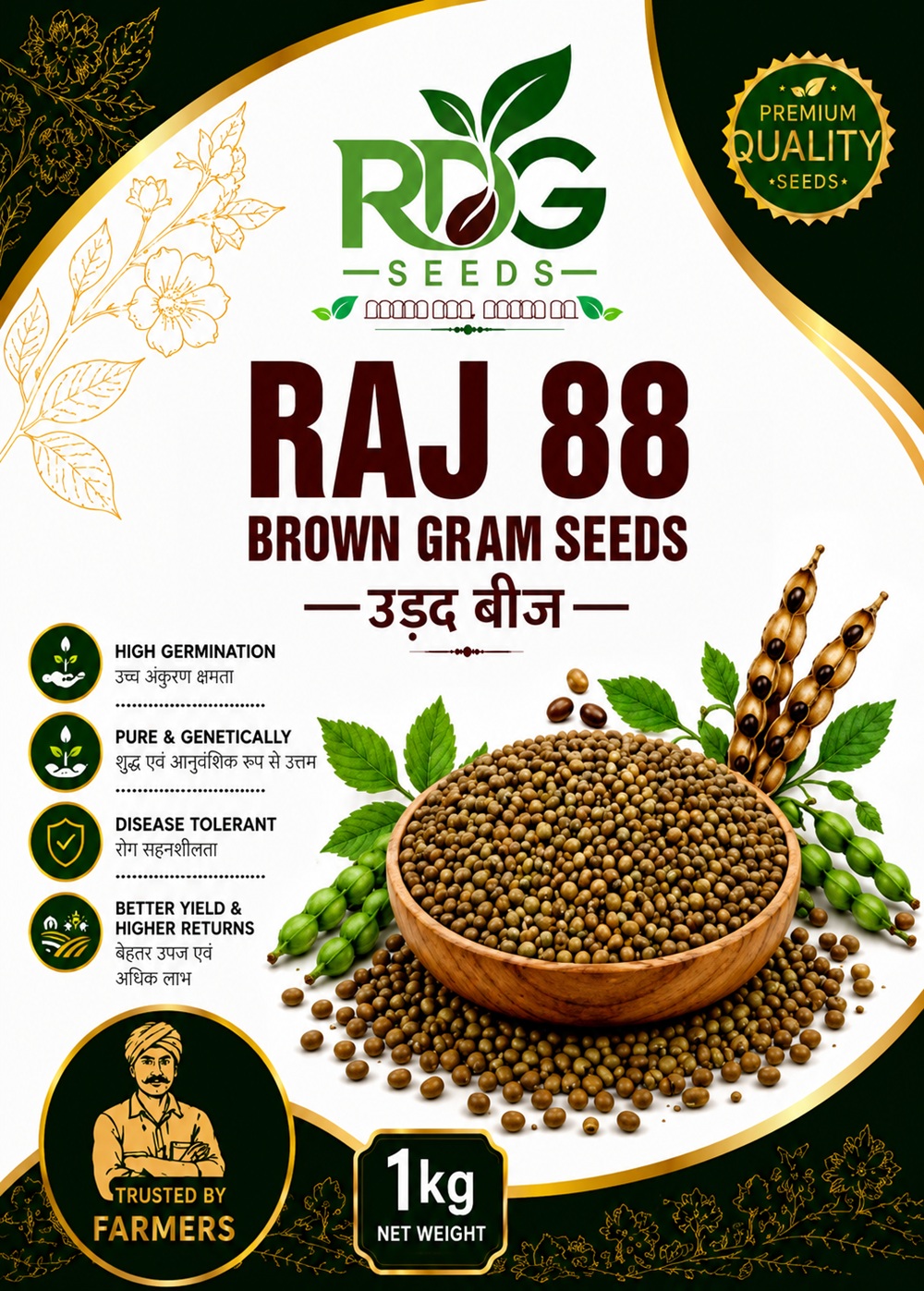
RAJ 88
Bhura (Brown) Urad Seed (a brown-seeded variant of Vigna mungo( is a fast growing, medium-hight pulse that matures in 70-80 days. It features broad leves, slightly hairy brownish pods, and dull-green to brown seeds.
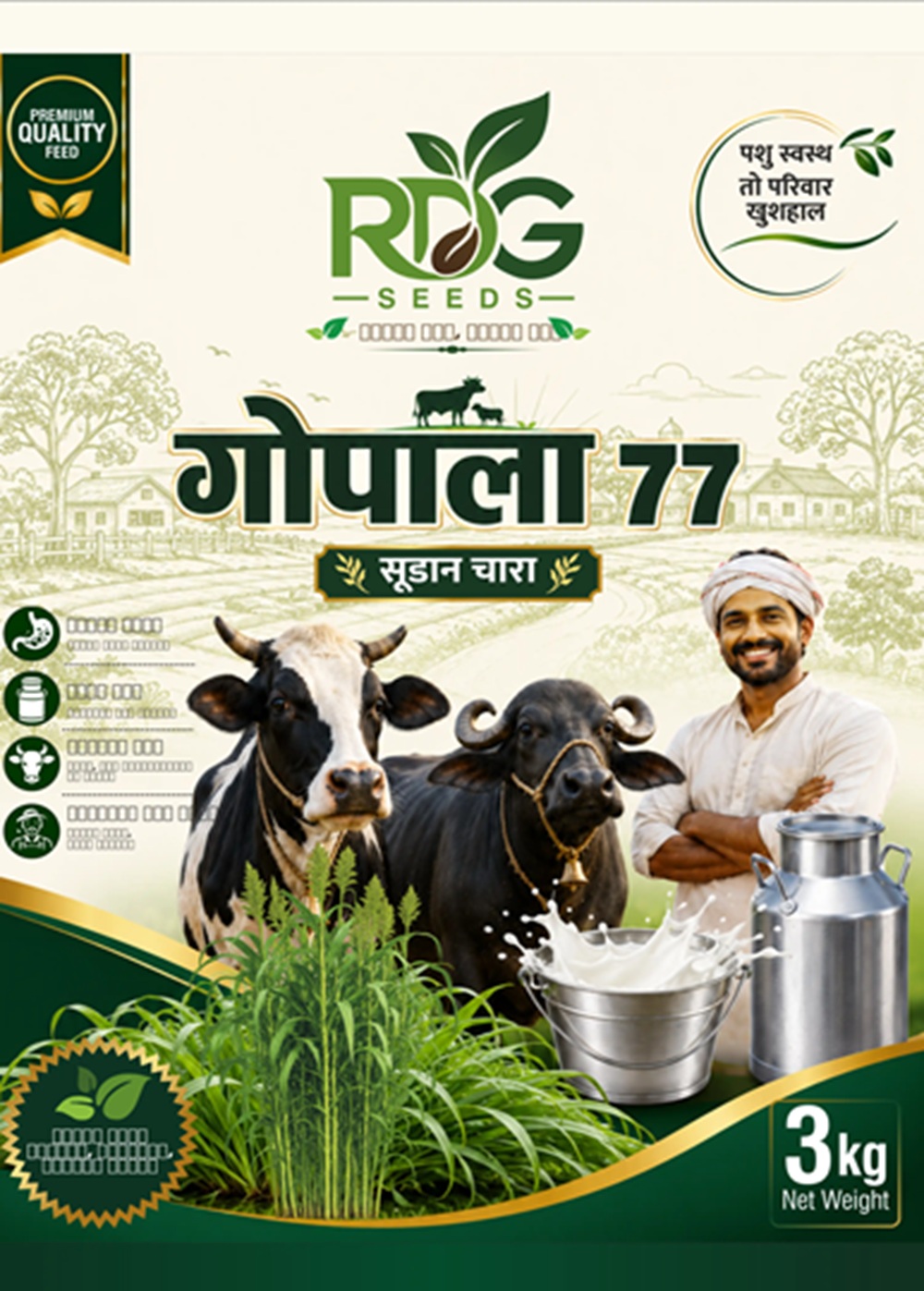
GOPALA 77
Sudan grass is a fast-growing, warm-season annual grass native to Eastern Africa. Highly valued for livestock forage and soil-building cover crops, it features tall, slender stems (3-9 feet) and broad leaves, and grows aggressively to produce massive amounts of biomass. Key Characteristics and Uses Plant Structure: It is a fine-stemmed, bunch grass that tillers (branches) extensively from the base, featuring deep fibrous roots that help fracture compacted soil. Agricultural Uses: It is primarily cultivated as a pasture crop, for making hay or silage, and as a green manure cover.
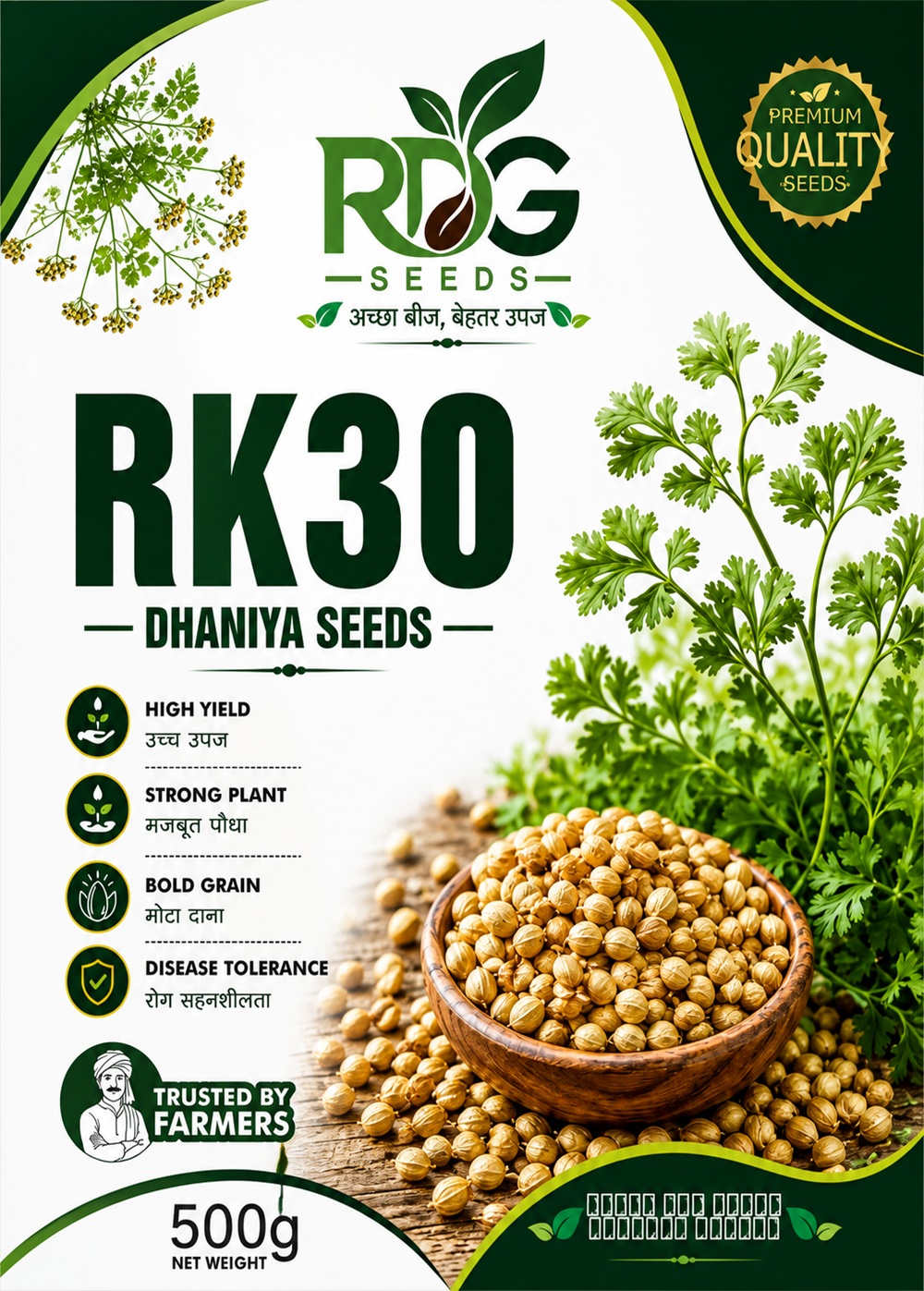
RK30
RK30 refers to varieties of Coriandrum sativum selectively cultivated for dense, lush, and broad foliage rather than seed production. The whole plant features a thin, bushy herb structure with feathery, alternate leaves that emit a pleasant, citrusy aroma. Description of Pattedar Dhaniya Seed Appearance: These seeds, also known as the plant's dried schizocarp fruit, are globular (3–4 mm in diameter) and vary in color from pale-white, straw-beige to light-brown. When crushed, they split into two halves (locules) containing a single seed.
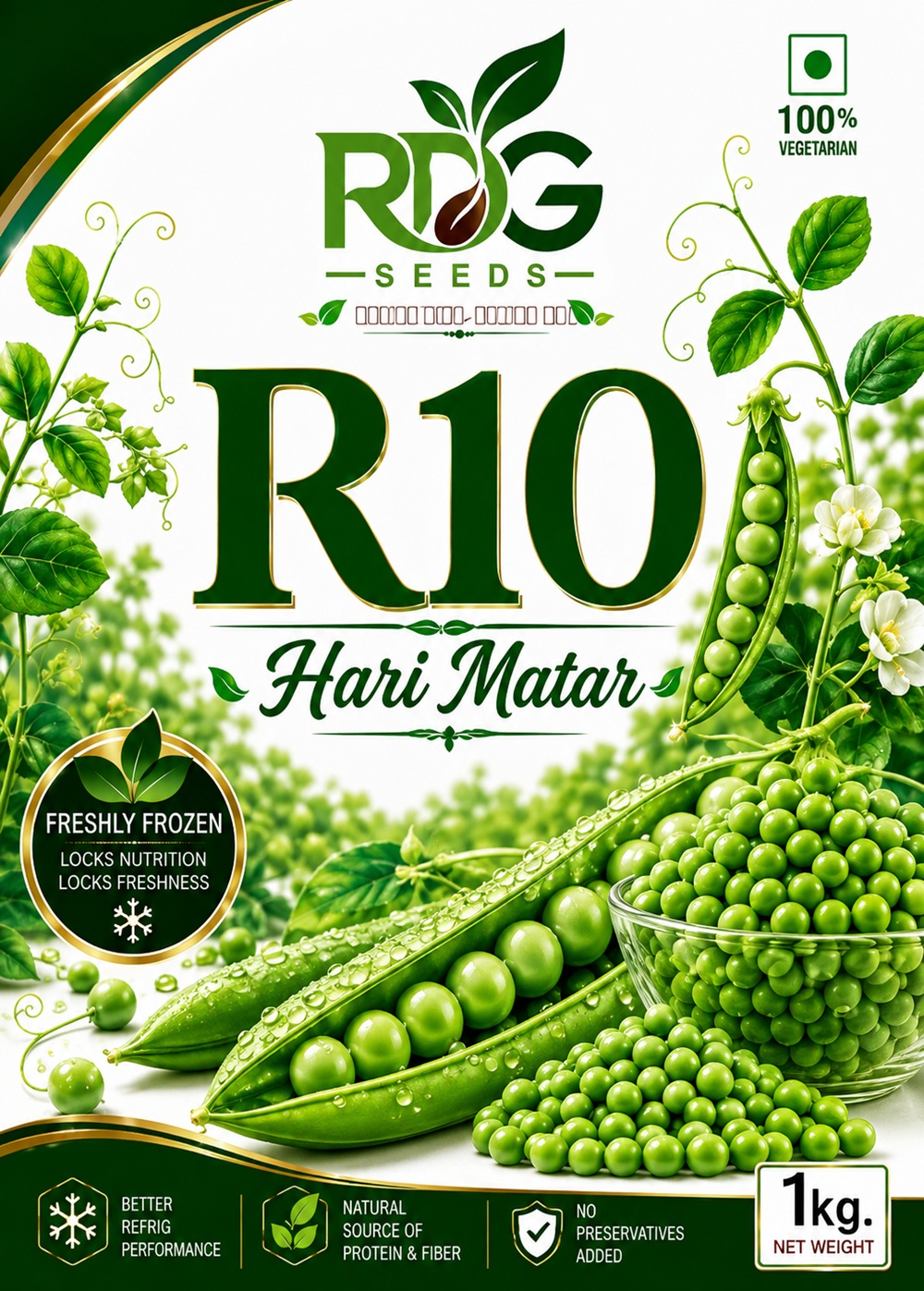
R10
Hari matar ke seed are small, spherical seeds found inside the pods of the Pisum sativum plant. They are cool-season vegetables prized globally for their sweet, crunchy, and mildly starchy taste. Physical & Botanical Description Appearance: Fresh green pea seeds are small, round, and vibrant green